
Review of The Girl in the Wall
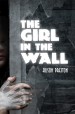
“Alison Preston of Winnipeg is unique among crime writers for a couple of reasons. And, no, being from Winnipeg is not one of them.
Preston must surely be the only author of crime fiction who spent 28 years with Canada Post as a mail carrier. When you think about it, carrying mail makes an excellent day job for a writer. It can’t take much brain power for the postwoman-writer to get the right letter into the right house’s mail slot, and all the rest of the mind’s activities can be applied to shaping and memorizing sentences and whole chapters. One imagines that by the end of Preston’s daily shift, she might have found at least a third of a chapter waiting to be entered on her typewriter or computer (it helps the process that she writes clear sentences and short chapters).
The nature of Preston’s plotting offers the second example of her one and only style, certainly among Canadian crime writers. No one else in the country’s mystery community comes close to matching Preston’s combination of humour and creepiness. On almost every page of The Girl in the Wall, Preston’s fifth book, the readers experience both giggles and an impulse to pull the covers over their heads.
The double-barreled reaction begins with the character of Morven Rankin, also known later in the novel, by her own quixotic choice, as Mrs. Mortimer (there is no Mr. Mortimer). Morven is born “not quite right in the head.” The book follows her through her childhood as the oddball kid who is subject to much mean bullying. Then, still in her teens, she arrives at her lifetime’s work: she takes photographs of people in Winnipeg hospitals just before or just after they pass on. These become souvenirs for bereaved families.
The book takes leave of Mrs. Mortimer in 1969 for the time being, and scoots forward to 2006. From that moment until the climax, the narrative focuses on Frank Foote who was the central figure in two of Preston’s earlier novels. Back then, Frank worked as a Winnipeg police inspector, the force’s ace investigator. Now he’s retired and runs a small home renovation business.
Tearing down the wall of a client’s house, he comes upon the body of the title. It’s a child who has been killed and hidden for decades behind wood and plaster. Frank, who is a very likeable character if you overlook his old guy fits of crankiness, gets on the case. He flashes back on Mrs. Mortimer whose troubles and occupation he was aware of from years earlier. Frank and Mrs. Mortimer cooperate to solve the mystery of the girl in the wall. In the process, they give us an altogether agreeable, funny and mordant piece of crime writing.”
More Reviews of this title
“According to author Alison Preston, strange things happen even in quiet suburbs. In fact, her sixth novel spins such a tale. Winner of the 2012 Margaret Laurence Award for Fiction, the book recounts the story of an eccentric young woman and an unsolved murder in Norwood Flats, a Winnipeg neighbourhood.
Preston’s mystery novels have several features in common. For the most part, her books explore unusual circumstances that reveal the dark side of human nature. In The Rain Barrel Baby, the body of a dead baby is discovered in a rain barrel next door to the home of detective Frank Foote, a recurring character in Preston’s novels. Sunny Dreams weaves a story about the abduction of a baby in a public place in the 1950s. Often the mysteries remain unsolved until decades later.
At the outset, Preston recounts the sad early life of the protagonist Morven. From an early age, she is labelled an oddball because of her habit of staring at people and her obsession with death. As a result, classmates and neighbours frequently tease her. Morven and her older brother George are usually left on their own; their mother is mentally ill and their father is a workaholic. Thus, George serves as the surrogate parent and protector of his sister. During her teenage years in the 1960s, Morven’s life worsens because she is repeatedly bullied.
To raise Morven’s spirits, George buys her a camera. She enjoys taking snapshots and eventually starts her own photography business, specializing in portraits of the terminally ill just prior to death. The job helps Morven gain self-confidence and she reinvents herself as “Mrs. Mortimer.” Her work goes well until one day at the hospital, she inadvertently witnesses the murder of a newborn and takes a snapshot of the suspects. Morven makes the decision not to call the police, but the incident weighs heavily on her mind. Decades later, Frank Foote, now retired from the police force, discovers a child’s skeleton buried between the walls of a house that he is renovating. At that point, Frank enlists Mrs. Mortimer’s help to solve the case. The novel consists of three parts. In the first section, Preston presents readers with background information concerning Morven and George’s upbringing in the 1950s. The second part describes Morven’s passion for photography and the murder of the newborn baby in the ’60s. The final section takes place in 2006, when Frank Foote gets involved in the unsolved case. Much to the book’s credit, Preston’s lucid, succinct prose maintains our attention throughout the novel.
Her new name, Mrs. Mortimer, freed her somehow from the old jokes and the kids who told them and from a whole lot of other bad memories as well. It turned her into more than just a peculiar person with a camera slung around her neck. And the Mrs. part of it gave her a legitimate air. She felt it immediately, the change. It didn’t give her a new personality, but it buffed up the one she had, lent it a finer edge.
Preston’s attention to detail is evident in her depiction of previous eras like the 1950s and early ’60s. Times were different then, especially people’s attitudes and values. Neighbours generally knew each other, people often lived in the same house for many years and every neighbourhood had a corner store.
No doubt readers will find The Girl in the Wall a page-turner. Once again, Preston has provided her audience with an absorbing story that scratches below the surface, proving that things are never quite what they seem to be.
”
“Winnipeg's Alison Preston returns with a new mystery, another entertaining expose of evil doings in the seemingly quiet Norwood Flats. This one finds her favourite character, Frank Foote, in mid-life-crisis mode, which contrasts nicely with the mawkishly humorous goings-on.
Like past Preston yarns, The Girl in the Wall varies in format from the usual mystery. The body suggested in the title isn't discovered until midway through the book. In fact, the novel is split into two distinct halves. The first is mostly presented from the point of view of Morven Rankin, or Mrs. Mortimer, as she eventually calls herself.
"Morven Rankin was born dead," the novel begins. "It ran in the family." In case you think the protagonist is going to be dead throughout the book (as in Alice Sebold's The Lovely Bones), Preston quickly establishes that baby Morven, like her mother and her grandmother, was brought back to life by alert nurses. If this bizarre fact -- that all three were dead at birth -- doesn't cause you to snicker, the narrator follows it up with this: "You'd have thought by the time they got to Morven they would have been on the alert for the birthing emergency.... After all, it was 1949; the bikini had been invented."
As Morven grows up, she seems "not quite right." She has trouble at school and she has difficulty expressing emotions. Her half-brother George becomes her protector; she does a lot staring, but she's a gentle sort. Preston does a fine job of making Morven a completely credible sympathetic character.
When Morven is 16 (in 1965), George gives her a camera, and she gets to be quite skilled at using it. On a visit to the hospital one day, she's asked by a mother to take a photo of the woman's newly dead baby boy. Morven gradually gains a reputation for this kind of photography and assumes the professional name of Mrs. Mortimer.
All is well until a strange young man named Jim Coulthard approaches her about being her business partner.
The second half of the novel begins many years later, in 2006. Frank is retired from the police force and he's renovating a house. He tears away the last of the drywall and finds a skeleton in a nightgown, presumably that of a small woman.
While following Frank's quest for the story behind the body, a quest that leads back to Mrs. Mortimer, we learn of his other tribulations: his worries about his growing kids, his thoughts about his dead wife, his "pathetic need to never let ... go" of his police work. The state of Foote's mind is as much a concern for the reader as the fate of Mrs. Mortimer. Tension mounts.
Except for brief sorties to the Women's Pavilion and Wellington Crescent, the novel takes place in Norwood Flats. It's like a self-contained village, where the characters walk everywhere (what a pleasant change from most contemporary mysteries!), from street to street, down to the river, over to the Red Top for coffee.
As in her previous efforts, like Sunny Dreams and Cherry Bites, Preston moves you swiftly through this tantalizing tale with crisp dialogue and good plot twists.”
“A down-home style makes The Girl in the Wall an irresistible treat. The protagonist, former Inspector Frank Foote of the Winnipeg Police Force, along with a new partner in a home renovation business, find a skeleton of a young female as they are opening up a wall.
The story-telling feels real. The integration of the setting, the action and dialogue spin a tale that grabs hold.
Mrs. Mortimer, a quaint soul whose life’s calling is taking photos of the recently deceased is a highlight of character portrayal and makes this novel an award contender. The Girl in the Wall is a must read.”
“
Winnipeg’s Alison Preston is becoming one of Canada’s most consistently good crime writers. The Girl in the Wall, her fifth novel, is as funny and smart as the last four, but it takes plotting to a new high.
“Morven Rankin was born dead. … It ran in her family.” That opening line is irresistible and creepily original. It takes us right into the head of an unusual woman whose story occupies the first half of the novel set in Preston’s favourite location, the Norwood Flats neighbourhood in Winnipeg.
The second half of the tale takes us to the present day and former police inspector Frank Foote, whose retirement business is home renovation. When a wall is opened up, a skeleton appears. Work halts and the investigation begins. The relationship of the body to Morven Rankin (victim, witness or worse) brings us back into the historical mystery, and it’s one of Preston’s best ever.
”





 Back to top